


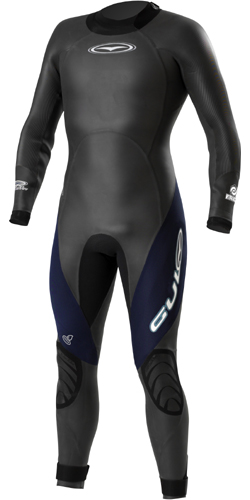
 Neoprene wetsuits are an amazing invention, allowing wearers to stay warm in chilly waters that they would otherwise never be able to withstand for any length of time. But there’s a common myth about how they work, one I’ve heard repeated over and over again. The myth is this: Wetsuits keep you warm by trapping a thin layer of water between your skin and the suit.
This is incorrect. A wetsuit that is bone-dry on the inside will actually be warmer than one that’s wet. Neoprene is a type of stretchy closed-cell foam that gains its insulating abilities from zillions of tiny enclosed nitrogen air pockets, or microscopic bubbles, that are created within the neoprene during its production process. The air in these bubbles is trapped; it cannot migrate out of the material. All of this dead air space impedes heat transfer, allowing you to retain your body heat rather than losing it to the cold water. Nitrogen is particularly resistant to heat transfer, helping to optimize neoprene’s insulating abilities.
The myth probably arises from this fact: Once water penetrates the suit, it is essential that it remains trapped in place in order to keep you warm. (Note that water can’t pass through neoprene; suits fill with water through the neck, leg, and arm openings, or through leaky seams or punctures.)
Your body quickly warms a thin layer of water that finds it way between your skin and the suit; body heat and the insulating neoprene then maintain it at a comfortable temperature. If, however, that warm water is forced out of the suit due to motion or turbulence (the dreaded “flush”), it will be replaced by another cold layer that must again be warmed. This slowly drains your body’s heat-producing energy and will reduce the amount of time you can comfortably be in the water. For this reason, wetsuits should fit as snugly as possible without restricting motion. Loose suits allow more water to more easily flow through the suit, robbing you of neoprene’s insulating benefits.
So in conclusion, our common wetsuit myth should instead read: Wetsuits keep you warm even when there’s a thin layer of water trapped between your skin and the suit.
As an aside: Interestingly, the number of nitrogen bubbles in the neoprene affects buoyancy. (All that trapped air floats.) As a general rule, the thicker the wetsuit, the more it will float. But different neoprene is used depending on the intended use of the wetsuits. For example, buoyancy is a challenge for divers, who are trying to stay submerged. As a result, diving wetsuits typically contain less trapped air than a surfing wetsuit of comparable thickness; consequently, a thicker suit is necessary to provide the same level of warmth.