


How essential is it to put your food in bear boxes even if there aren’t any bears in the area? While bears can be a major concern, they’re not the only wild animals that pose a risk.
We see it all too often. Campers arrive after a long slog overs hills and rivers to finally reach home. In an effort to quench their thirst, they search for the water pump. As they rifle through their backpacks for a headlamp, snacks, granola bars, Ramen noodles, and gorp all spill onto the tent platform.
The scent of food from such a spill attracts local wildlife. As soon as the campers leave, mice, voles, gray jays, and squirrels follow the scent to feed on the scattered items. Resourceful creatures, they’ll even nibble little holes in the corner of nylon packs to get to the food.
Whether accidental or intentional, leaving food out for wildlife has become a problem.
We’ve all heard the saying “A fed bear is a dead bear.” But this ethos applies to all life in the animal kingdom. Fed animals aren’t as good foragers in the crucial winter months. When these foraging skills do not develop, animals become weaker and often end up succumbing to starvation or become prey. When we feed animals, it normalizes human contact and emboldens them to approach people. This habit can lead to deadly consequences.
Fed animals quickly realize that people mean food, not danger. Once conditioned to human food, animals will seek it out, creating conflicts with humans and putting them at risk of being killed to ensure public safety. In a larger context, we must remember that as recreationalists on public lands, we are guests: we should strive to leave these beautiful places wild and create as little impact as possible.
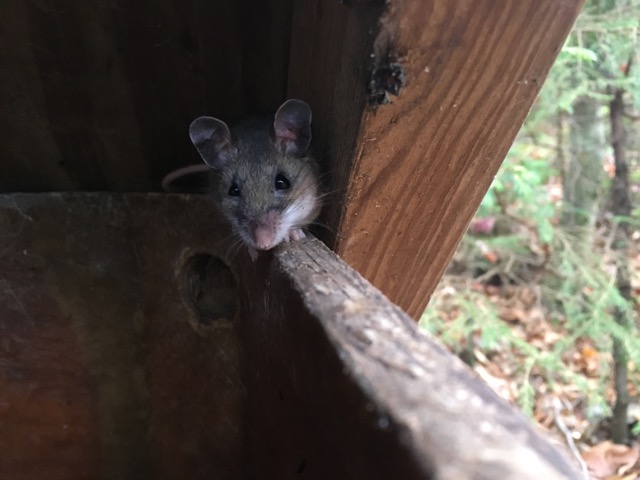
Today we’re experiencing an overpopulation of rodents for a variety of reasons. Climate change tops the list, as the harsh winters of the past, on average, have declined. The more severe conditions used to keep the smaller rodent populations in check. But this is no longer the case, and the populations have continued to grow.
Wildlife biologists have also noted an increase in seed production over the years, which is a main dietary component for many of these rodents. The abundance of seeds allows them to pack on extra pounds, contributing to their winter survival rate. These longer life cycles also allow for more breeding and more litters.
Once a mouse has gotten a delicious nibble they tend to hang around to see what else they might find. In shelters or platforms, this is concerning because of the risk of Hantavirus, which is contracted when people inhale remnants of mice feces or urine. The more food that is left in shelters, the higher the risk of infestation and infection.
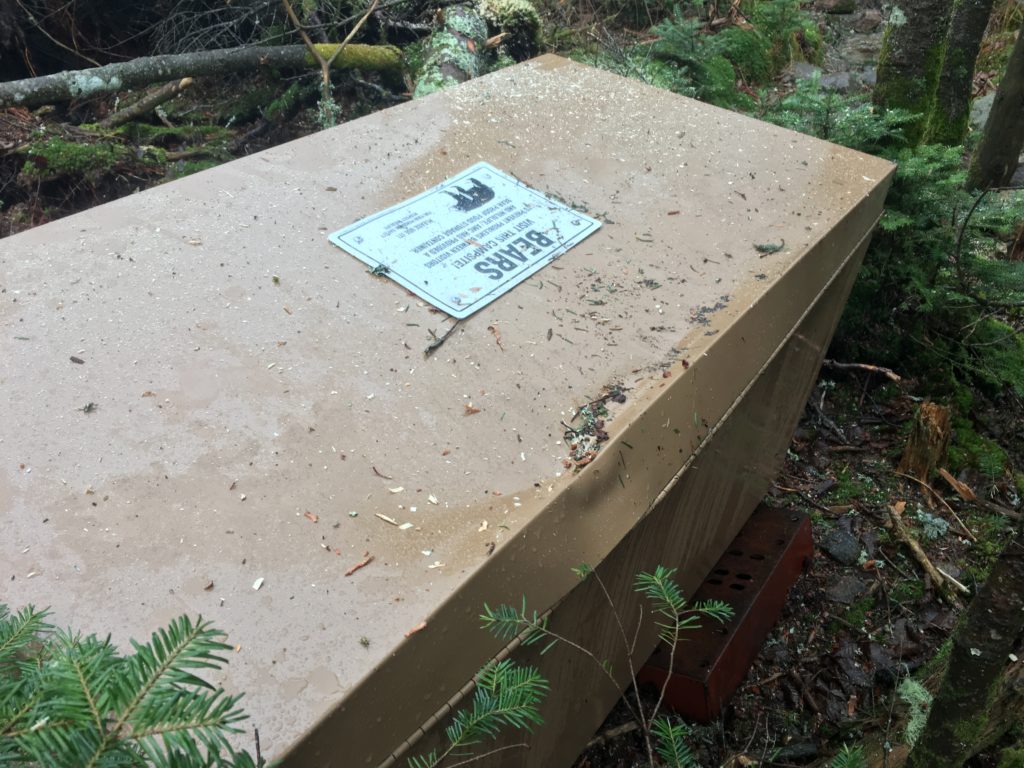
At AMC backcountry campsites, we provide campers with food storage boxes that prevent these creatures from reaching food. We are excited to announce that a substantial grant from the Appalachian Trail Conservancy (with generous support from L.L. Bean Inc.) has allowed us to purchase another food storage box that will be placed at Guyot campsite. Without these boxes, our sites would be a hotbed for human-fed wildlife. Hanging your food properly in the White Mountains, especially at higher elevation, is nearly impossible. These boxes allow us to remain as guests in the woods, creating as little impact on our wild neighbors as possible.
Please remember to only share snacks with fellow human hikers and lock up your food properly when you’re not on the go. Happy trails!