


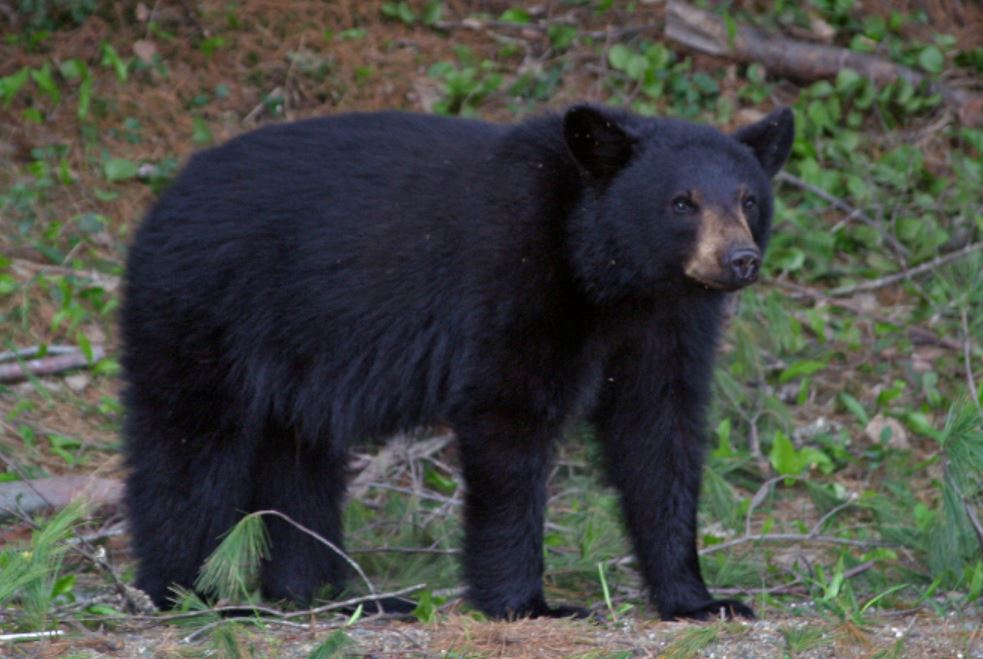
The black bear population is exploding in New England, particularly in Vermont and Massachusetts.
As a recent article in the Boston Globe recounts, the number of bears in Vermont has doubled over the past two decades, to an estimated 6,000. In Massachusetts, the population is nine times larger today than 30 years ago (an estimated 4,500 bruins now roam the Bay State). And while the rate of population growth is less in New Hampshire, there are still at least 1,000 more black bears today (approximately 5,700) than a decade ago.
Maine has more black bears (approximately 30,000) than the rest of New England combined, including this one near St. Croix Junction. Photo: U.S. Fish and Wildlife Service/Flickr
As the bear population increases, the odds of an encounter in the backcountry rise as well—especially the chance of an encounter between a bear and your food. To keep your food safe (and to help prevent bears from developing an association between hikers and food), here are the options.
Hang It: Bear Bag
To be bear-proof, food must be suspended at least 10 feet off the ground and 8 feet from the trunk of a tree. To accomplish this by creating a bear bag, you’ll need to arry 50 to 100 feet of thin cord and two stuff sacks.
- Look for a load-bearing branch 20 to 25 feet overhead that extends far enough from the trunk.
- Tie a rock or other heavy object to one end of the cord and toss it over the branch. Before doing so, make sure the cord is fully uncoiled and not a snarled mass. Step on the opposite end of the line so it doesn’t get pulled out of reach in the tossing process.
- Divide your food into two stuff sacks.
- Attach one to the cord and pull it up to the branch.
- Attach the other sack to the cord as high up as you can reach. A small carabiner makes this easier; tie a figure-eight on a bight overhead and then clip the sack to it.
- Place the remaining cord inside the sack so it doesn’t dangle.
- Push up the second stuff sack using a trekking pole or long stick until it is at the same level as the first.
- Sleep well!
Can It: Bear Canister
A bear canister is a heavy-duty container that is impenetrable to even the wiliest bruin. They’re heavy, bulky, and require some practice to pack well, but are the ultimate no-fail defense. A range of options are available, including:
- The classic black Garcia Backpackers Cache ($75, capacity: 615 cubic inches). It’s heavy (2 pounds, 12 ounces) but indestructible; buy one and you’re set for the rest of your life. The lid locking mechanism requires either a coin or flathead screwdriver (like the one on many pocket knives and multi-tools)—keeping one handy in your pocket makes life much more convenient.
- The BearVault, which is available in two sizes. The larger Model BV500 ($80) is 3 ounces lighter than the Garcia, and features a wider opening and additional capacity (70 cubic inches). In using these, however, I’ve found the screw-top lid-locking mechanism to be frustrating to deal with, especially in wet conditions.
- Other options include the mega-beefy Counter Assault Bear Keg ($80, 3.5 pounds, capacity: 716 cubic inches) and the Bearikade, which comes in several sizes. Bearikades are the lightest weight and most expensive canister options available (the Weekender version weighs in at 31 ounces with a capacity of 650 cubic inches but runs a whopping $288).
Sack It: Stuff Sack
Over the years I’ve hung my food many times and lugged a bear canister on dozens of trips (mostly in Alaska). I’ve also oft lamented the hassle of hanging and the headache of heavy canisters. Which is why I’ve long been intrigued by the Ursack, an indestructible stuff sack made from Spectra fabric.
The Ursack S29 Allwhite ($69) weighs in at a mere 7.8 ounces, has a capacity of 650 cubic inches, and was certified as an effective bear-resistant product by the Interagency Grizzly Bear Committee in 2014. (If you prefer that your food doesn’t get crushed by a bear attempting to get inside, you can add a 10.8-ounce aluminum liner for an extra $21.50). To keep bears from running off with it, you’ll need to tie its unbreakable drawcord to a tree or other immovable object.
The Ursack has some entertaining videos of bears attempting (and failing) to get into an Ursack. This one is pretty good: